In an earlier Words on the Line post, I noted why meeting summaries are so challenging to many employees who need to write them. For this reason, I provide a template to jumpstart the composition process. Keep in mind that this template works well for the results-driven business world better than it does for the process-driven government style, which uses the Robert's Rules of Order.
Notes on effective writing at work, school, and home by Philip Vassallo, Ed.D.
Sunday, July 10, 2016
Sunday, July 03, 2016
BOOK BRIEF: "Dialogue: Rediscover the Transforming Power of Conversation" by Linda Ellinor and Glenna Gerard
Linda Ellinor and Glenna Gerard dedicate much of their book to the applications of Dialogue. As consultants on
Dialogue theory, they begin with an actual transcript of a dialogue among
several experts on the subject, which they arranged not only to ground the
reader on the principles of Dialogue, but also to model how an actual dialogue
might unfold. The authors’ in-depth focus on the necessity of
appreciating silence and releasing certainty for a successful dialogue offers
revelatory potential to these ideas.
Those searching for
literary relationships to Dialogue need look no further than Dialogue:
Rediscover the Transforming Power of Conversation. Poetry is generously
scattered throughout the pages, and apt quotes abound from philosophers like
Buber, poets like Rilke, and painters like Matisse.
Most valuable are the authors’ strategies for
bringing value to Dialogue, complementing Daniel Yankelovich’s strategies
for successful Dialogue. Most enjoyable is the enthusiasm that the authors
infuse in their personal encounters with people in Dialogue. And most
appreciated is the timeless advice they provide for those stifled in their
attempts at Dialogue: "When you get stuck and
frustrated, there are three keys to learning and moving beyond: 1. the
willingness to stick around; 2. suspending judgment; and 3. refocusing
attention to engage at a different level."
Sunday, June 26, 2016
BOOK BRIEF: "The Magic of Dialogue: Transforming Conflict into Cooperation" by Daniel Yankelovich
Daniel
Yankelovich looks at
Dialogue from the perspective of a political scientist and sociologist. The
book’s subtitle points to Yankelovich’s passion for understanding
the world order through public opinion. (He is a founder and president of
Public Agenda, a leading American public policy research organization.) He is concerned mainly with what David Bohm refers to as the collective dimension
of the human being, and he unfolds it by combining his penchant for distinguishing
between popular belief and empirical data with an optimistic vision of society
at large:
The public, I have learned over the
years, forms its judgments mainly through interactions with other people,
through dialogues and discussion. People
weigh what they hear from other against their own convictions. They compare notes with one another, they
assess the views of others in terms of what makes sense to them, and, above
all, they consult their feelings and their values. The public doesn’t distinguish sharply
between facts and values, as journalists and social scientists do.
Yankelovich
draws his illustrations from foreign and domestic political affairs with a
watchful eye on three critical moments of Dialogue: an acceptance of equality between
the parties, an attempt at listening with empathy, and a willingness to surface
any assumptions. Furthermore, he reinforces William Isaacs’ distinction between debate
and dialogue by underscoring debate’s combative nature and dialogue’s
collaborative spirit.
Among the
highlights of this highly readable volume are sections which form the core a
cogent instruction manual for Dialogue: The 15 strategies of successful
dialogues, which include tips for gaining and maintaining trust and for
clarifying communication barriers, and the 10 potholes of the mind,
which identify egocentric, prejudicial, or unfocused behaviors that negatively
affect Dialogue.
Sunday, June 19, 2016
BOOK BRIEF: "Dialogue and the Art of Thinking Together" by William Isaacs
In Dialogue and the Art of
Thinking Together, William Isaacs extends Dialogue theory to its practical applications. Identifying pathologies of thought
(abstraction, idolatry, certainty, and violence), Isaacs unearths
counterbalancing principles of Dialogue (participation, coherence, awareness,
and unfolding) and their corresponding practices (listening, respecting,
suspending, and voicing). Like his
mentor David Bohm, Isaacs carefully defines key terms and outdoes the master when
reaching into his seemingly endless reserve of rich illustrations from history,
popular culture, other cultures, literature, music, philosophy, management, and
organized labor to sharpen his focus on the clear distinction between
Dialogue and other forms of human communication.
Isaacs also freely
draws parallels with other ideas, such as David Kantor’s four-player system
(mover, follower, opposer, and bystander), to press a case for the value of
each personality type in the communication continuum. His new
capacities for behavior diagrams crystallize the roles of each player in
Dialogue, and his prose elaborates on each player’s intents and potential
communication shortcomings.
To Isaacs’s credit, he never shies from
admitting that attempts at Dialogue can lead to painfully protracted and
frustrating impasses. However, he depicts the rewards of communication
breakthroughs as virtual miracles:
Hours go by and it
seems only minutes have lapsed. It is
very difficult to interrupt dialogues that are in space when the pressure of
kronos (real time) arises.
That kind of writing will sell
readers on trying to experience Dialogue for themselves. Isaacs’s accessible style makes for the
perfect companion piece to Bohm's On Dialogue. In fact, his exhaustive associations between
theory and technique render Dialogue and the Art of Thinking Together the ultimate
handbook on the subject.
Sunday, June 12, 2016
BOOK BRIEF: "On Dialogue" by David Bohm
David Bohm’s legacy crosses the worlds
of science and language. His championing of a causal interpretation of quantum
physics led to lengthy conversations with Einstein, but it won him little
respect among most scientists, who preferred the orthodox indeterminate
approach espoused by Niels Bohring and Werner Heisenberg, the Copenhagen School
theorists (and subjects of Michael Frayn’s Tony Award-winning play Copenhagen).
In the early 1950s, Bohm stood fast against Senator Joseph McCarthy’s
anti-Americanism inquiries, which seriously damaged his professional standing
in the United States and caused him to live and work abroad until his
retirement in 1987 and his death five years later.
Perhaps it was his
insistence on seeing order in the universe or his deep principles in the face
of McCarthyism that inspired Bohm to fashion his paradigm about the implicate
order and undivided wholeness, through which he cogitates with remarkable
lucidity about humanity’s transcendence beyond individual and collective
domains to an immersion in a cosmic dimension. This unique fusion of science
and society resides at the center of Dialogue, and Bohm devotes substantial
space to it in On Dialogue, a slim and engaging treatise.
Dialogue is
unlike discussion or debate, where demonstrating one’s acumen, outwitting an
adversary, or winning a political advantage is paramount. It requires a
different sort of reflection that strikes at the heart of self-awareness and
empathetic discourse. As Bohm observes,
Thought
should be able to perceive its own movement, be aware of its own movement. In
the processes of thought, there should be the awareness of that movement,
of the intention to think, and of the result which that thinking
produces.
A seminal manifesto on
communication breakthroughs, Bohm's book provides just the theoretical grounding that
a Dialogue neophyte would need to venture into this provocative terrain of how
we mean—a question general semanticists pose assiduously.
Sunday, June 05, 2016
BOOK BRIEF: "The Essential Pinter: Selections from the Work of Harold Pinter"
I remember reading one of my favorite writers, Harold
Pinter, on the eve of my
wedding at age 22. As tomorrow marks my fortieth wedding anniversary, I
remain struck by how Pinter's method and themes, if anyone has ever adequately
described them, reflected my life and mindset then, and still does. The ideas he
expresses have always been rooted in my pathos, and they surface for the first
time when his characters utter them.Forty years ago today, I was living in a 500-square-foot, one-bedroom basement apartment in the Bronx, just a four-block walk from the noisy 180th Street train station, whose tracks ran behind a high concrete wall topped with barbed wire to the noisy 180th Street train station. In one semester, I would graduate with a B.A. in English from the City University of New York. My earnings as a part-time taxicab driver and homework tutor for a social services agency were not much more than $100 a week, which was not bad considering my rent was only $100 a month and the subway was 50 cents a ride. But my prospects of becoming a high school English teacher were dimming at a time when the New York City Board of Education was not hiring because of budget problems. The new responsibilities of becoming a husband, college graduate, and licensed teacher were weighing on me.
Yet without any good reason, I thought somehow everything would turn out all right. Even back then I knew that life was inexplicable. Just six years earlier, at 16, my ambitions as a denizen of the James Monroe housing projects were like those of many of my friends: to drop out of high school, find a job for six months, and figure out a way to get fired so that I could collect unemployment. I certainly had no idea that I would find a job with a nonprofit organization, where I would stay for 19 years before running my own communication consulting business for the past 20 years.
I saw my first Harold Pinter play at the Classic Stage Company's 1973 production of The Homecoming. I was 19, in my second year of college, liberated by having changed majors from business to English. I believed that since New York City was in its worst fiscal crisis ever, I had nothing to lose by focusing on what I loved. Sure I might not find a job right away. But why chase after a career I would later regret?
What I saw on stage that evening hypnotized me. I had no idea what these characters were talking about, but I knew every word was meaningful. Without seeing any overt act of violence or hearing one subversive statement, I was certain I had witnessed the most disturbing sort of subversive violence, the kind we either don't recognize or dare not acknowledge as violence. Without completely understanding the dialogue, I believed that the actors' words could not be more real. I walked away from that theatrical experience transcendent, realizing the limitless potential of drama to depict the human condition. I have measured every other play I've seen since The Homecoming against that standard.
Is this a review of Pinter's work? You bet. I cannot separate the very details of my life from The Caretaker, The Homecoming, Old Times, No Man's Land, Betrayal, Family Voices, Moonlight, and many of Pinter's other plays and sketches. His dramas unfold as my life has, does, and likely will.
The Essential Pinter: Selections from the Work of Harold Pinter offers a good starting point if for those new to this playwright's playwright. It includes a sufficient sampling of his plays to make readers want to discover more of them. The poetry does not reach the same level as the drama, but this volume also includes Pinter's defiant 2005 Nobel Prize controversial and underappreciated acceptance speech.
Sunday, May 29, 2016
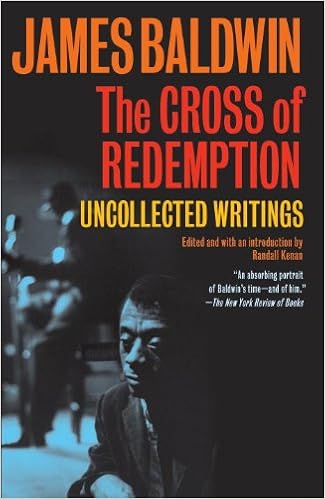
BOOK BRIEF: James Baldwin's Collected and Uncollected Essays
I would recommend any nonfiction work of James Baldwin. He is masterful in his reasoning and elegant, and at times surprisingly abrupt, in his prose. Years ago when Baldwin was still alive, I read his magnum opus, The Price of the Ticket: Collected Nonfiction, 1948-1985, marveling at how adept he was whether reflecting on race, jazz, language, politics, sexuality, literature, economics, or urban life.
The Library of America edition, pictured below, collects that volume along with nine more essays. The Cross of Redemption: Uncollected Writings includes speeches, letters, and book reviews, among other pieces, which did not appear in Baldwin's earlier books.
Collectively these books offer a deep look into the American psyche during Baldwin's half-century of remarkable composition, a key examination of a writer's unique style, and a powerful testament to his enduring influence on world literature.

Subscribe to:
Posts (Atom)
-
A participant in one of my workshops, D. Hom, asked a question about hyphenating expressions such as “end of year.” Determining what to h...
-
"I hope this email finds you well ... I hope you are doing fine ... I hope you are having a good day ... I hope you had a good weekend ...
-
READER QUESTION Could you settle an office dispute over whether the word “trainings” is legitimate? We might use it in a sentence...